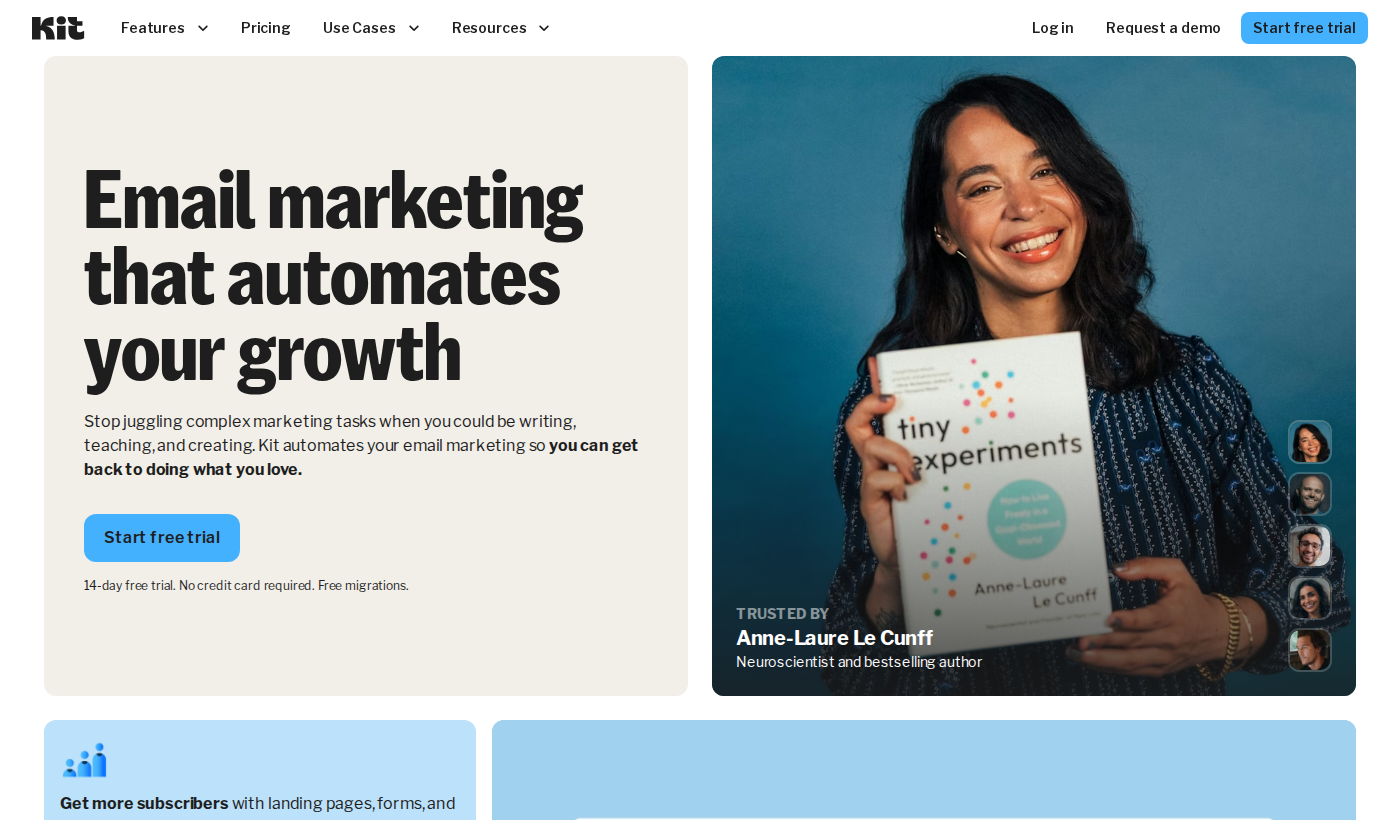
Still the Creator's Choice — But Is It Keeping Up?
Email marketing has gotten crowded. In 2026, creators have more options than ever — and some of those options are aggressively gunning for ConvertKit's audience. This convertkit review 2026 cuts through the noise: what ConvertKit (now rebranded as Kit) still does better than anyone, where it's showing its age, and who should actually be using it.
Quick context: ConvertKit rebranded to "Kit" in late 2024. The product is the same; the name on the tin changed. We'll use both names throughout since most people still search for ConvertKit.
What Is ConvertKit?
ConvertKit — now Kit — is an email marketing platform built specifically for creators: bloggers, podcasters, YouTubers, course creators, and newsletter writers. Founded in 2013 by Nathan Barry, it was one of the first platforms to say "Mailchimp is for retail brands; this is for people who have an audience."
That positioning still holds. Where Mailchimp optimizes for drag-and-drop newsletters and ActiveCampaign optimizes for enterprise sales funnels, ConvertKit optimizes for the creator workflow: grow your list, nurture your audience, sell your stuff.
The platform sits at convertkit.com and has over 600,000 creators using it as of 2025 — a number that speaks to genuine product-market fit in a noisy space.
Key Features
Visual Automations — Powerful Once You Get It
ConvertKit's automation builder is a visual flowchart tool that lets you map out subscriber journeys. Someone signs up via your lead magnet → they get a welcome sequence → if they click a specific link, they get tagged and enter a different sequence. It's genuinely powerful for nurture sequences and evergreen funnels.
The learning curve is real. The interface hasn't been dramatically redesigned in years, and compared to newer tools it can feel clunky. But the underlying logic is sound, and once you've built a few automations, the pattern becomes intuitive.
- Trigger-based: Automate based on form signups, tags, purchases, link clicks, and custom events
- Tag and segment system: Flexible subscriber organization without rigid list structures
- Broadcast scheduling: Send one-time emails to segments with granular filtering
Landing Pages — Better Than You'd Expect
ConvertKit includes a landing page builder that's surprisingly capable for a tool primarily known for email. Templates are clean, load fast, and convert well. For creators who just need a simple opt-in page for a lead magnet or course waitlist, it's good enough to avoid paying for a separate tool.
It won't replace Webflow or a custom-built Next.js page for complex needs, but for "I need a landing page by tomorrow," it delivers.
Creator Commerce — Sell Directly from Your List
ConvertKit added native commerce features that let you sell digital products — ebooks, courses, templates, coaching — directly without a separate platform. Stripe integration handles payments; ConvertKit handles delivery and subscriber tagging.
It's lean compared to Gumroad or Lemon Squeezy, but for creators who want everything in one place, the ability to sell a $27 PDF and automatically tag purchasers for a post-purchase sequence is genuinely valuable.
Pricing
ConvertKit's pricing is structured around subscriber count:
- Free: Up to 10,000 subscribers, unlimited landing pages and forms, email broadcasts. No automations on the free plan.
- Creator ($25/month for up to 1,000 subscribers): Full automation access, free newsletter recommendations, third-party integrations. Scales with subscriber count.
- Creator Pro: Adds subscriber scoring, advanced reporting, priority support, and the newsletter referral system (powered by SparkLoop).
The free tier up to 10,000 subscribers is one of the most generous in the industry — most competitors cap the free plan at 500-1,000 subscribers. If you're just starting out, ConvertKit's free plan is hard to beat.
Where it gets expensive: once you're past 10,000 subscribers, pricing climbs steeply compared to alternatives like Beehiiv. At 50,000 subscribers, you're looking at $166/month on Creator vs Beehiiv's $99/month on Scale.
ConvertKit vs Beehiiv
Beehiiv launched in 2021 and has become the most credible challenger to ConvertKit's creator audience. Here's the honest comparison:
- Newsletter-first design: Beehiiv is built around the newsletter product in a way ConvertKit isn't. The writing and publishing experience in Beehiiv is noticeably better.
- Monetization: Beehiiv's ad network and paid subscription features are more developed than ConvertKit's commerce tools. If newsletter monetization is your primary goal, Beehiiv has an edge.
- Automations: ConvertKit wins here. Beehiiv's automation capabilities are simpler and less flexible than ConvertKit's visual builder.
- Pricing at scale: Beehiiv is cheaper at higher subscriber counts. ConvertKit is more cost-effective at smaller lists (especially on the free plan).
- Integrations: ConvertKit has a larger ecosystem of third-party integrations — it connects with more course platforms, membership tools, and ecommerce systems.
Bottom line: If your primary product is a newsletter and monetization is via ads or paid subscriptions, Beehiiv is worth a serious look. If you're a creator selling courses, products, or services and email is a nurture channel, ConvertKit's automation depth still wins.
Who Should Use ConvertKit?
ConvertKit is the right choice for:
- Course creators and educators who need to segment audiences by interests and purchasing behavior
- Bloggers and content creators building email lists from zero — the free plan removes the barrier to entry
- Coaches and consultants who sell high-touch services and need flexible automation for lead nurturing
- Creators already embedded in the ConvertKit ecosystem — integrations with Teachable, Podia, Kajabi, and dozens of other tools make switching costly
It's less compelling for creators whose entire business model is the newsletter itself (look at Beehiiv), or enterprise teams who need advanced CRM features (look at ActiveCampaign or HubSpot).
If you're on the fence, start with ConvertKit's free plan — 10,000 subscribers free is a substantial runway to evaluate before committing.
Frequently Asked Questions
Q: Is ConvertKit still called ConvertKit in 2026?
A: Officially, the platform rebranded to "Kit" in late 2024. However, the domain and most references still use ConvertKit. The product functionality didn't change with the rebrand.
Q: How many subscribers can I have for free on ConvertKit?
A: ConvertKit's free plan supports up to 10,000 subscribers — one of the most generous free tiers in email marketing. Note that automations are not available on the free plan.
Q: Is ConvertKit good for beginners?
A: Yes, with a caveat. The basic features (forms, broadcasts, landing pages) are beginner-friendly. The automation builder has a steeper learning curve but comes with good documentation and templates.
Q: How does ConvertKit handle deliverability?
A: ConvertKit has a strong reputation for deliverability, partly because their text-first email format avoids the spam triggers that heavy HTML templates trigger. Their infrastructure is managed and monitored for sender reputation.
Q: Can I sell products directly through ConvertKit?
A: Yes. ConvertKit has native commerce features for selling digital products via Stripe. It's not as full-featured as dedicated platforms like Gumroad, but it's sufficient for simple digital product sales and integrates cleanly with your automations.
Verdict
ConvertKit — Kit — remains one of the best email marketing platforms for creators in 2026. The automation system is mature and flexible, the free tier is genuinely useful, and the creator-native positioning means the product evolves with its users' needs.
It's not without weaknesses. The interface feels dated compared to Beehiiv, pricing at higher subscriber counts is steep, and the commerce features are functional but not best-in-class. But for creators who need email to do more than just deliver newsletters — who need it to segment, nurture, and sell — ConvertKit's depth is hard to match.
Score: 8/10